

So, you've decided to add probiotics to your wellness routine—that's a fantastic step for your gut health. But now you're facing the big question: when is the best time to take them? It's a surprisingly common point of confusion, and the answer can make a real difference in how well your supplement works.
Let's cut to the chase. The best time to take a probiotic is generally just before or during a meal. Why? It's all about giving those beneficial bacteria the best possible chance to survive their journey to your gut.
Your Guide to Optimal Probiotic Timing
Think of your probiotic supplement as a team of tiny, live helpers on a critical mission to your intestines. Taking them at the right time is like giving this team a protective escort through the hazardous, acidic environment of your stomach.
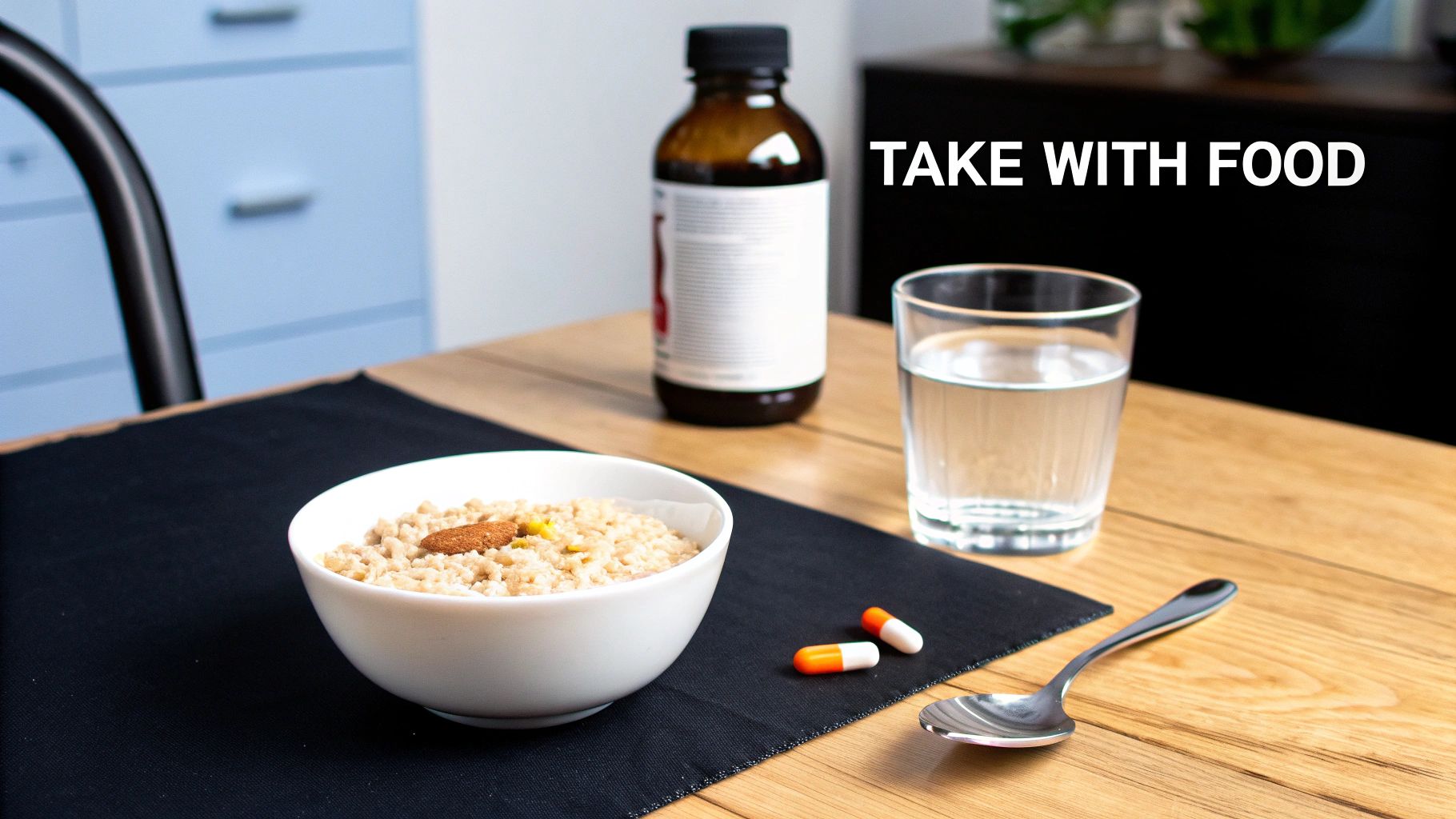
Why Timing Your Probiotic Matters
The biggest hurdle for any probiotic is making it through the stomach alive. When your stomach is empty, it's an incredibly acidic place, with a pH that can be as harsh as battery acid. This powerful acid is great for breaking down potential pathogens, but it can also wipe out the delicate, beneficial bacteria in your supplement.
The goal is simple: maximize the number of live bacteria that arrive in your intestines. Proper timing is one of the most effective strategies to achieve this, turning a good supplement into a great one.
Food is the key. Eating acts as a natural buffer, temporarily raising your stomach's pH and creating a much friendlier environment for those microbes. Research confirms that both stomach acidity and the speed at which your stomach empties are critical factors for probiotic survival.
Taking your probiotic about 30 minutes before a meal, or right along with your food, gives these helpful bacteria the shield they need. You can read more about the research behind probiotic timing to see how science backs this up.
To make things even simpler, here’s a quick reference table to help you nail down the best timing for your daily dose.
Probiotic Timing At a Glance
This table breaks down the recommended timing for taking probiotics based on a few common situations.
| Situation | Recommended Timing | Primary Reason |
|---|---|---|
| General Daily Use | Just before or with a meal | Food acts as a buffer against harsh stomach acid, protecting the bacteria. |
| When Taking Antibiotics | At least 2-3 hours apart from the antibiotic | This creates a safe window, preventing the antibiotic from killing off the probiotics. |
| For Building Consistency | With the same meal every day (e.g., breakfast) | A consistent routine is the best way to ensure you never miss a dose. |
Ultimately, finding a time that fits seamlessly into your daily life is what will give you the best long-term results.
Why Mealtime Is a Probiotic's Best Friend
Think of your stomach as a security checkpoint for your body. Its main defense is a highly acidic environment designed to destroy harmful bacteria before they can cause trouble. It’s an incredibly effective system, but it has one small problem: it can’t tell the difference between friendly bacteria and dangerous ones.
When you take a probiotic supplement, those millions of beneficial microbes have to run this acidic gauntlet. Taking them on an empty stomach is like sending them into a battle unarmed. The harsh stomach acid can wipe out a huge number of them before they ever reach your intestines, which is where they need to be to do any good.
How Food Acts as a Protective Shield
This is where a meal changes everything. When you eat, the food in your stomach acts as a natural buffer, temporarily raising the pH and making the environment far less acidic. It’s like creating a safe passage right through the danger zone.
Food provides a physical shield, mixing with the probiotic bacteria and protecting them from the full force of your digestive juices. This simple act gives a much higher percentage of the live cultures a fighting chance to arrive safely in your gut, ready to get to work.
Taking your probiotic with food is a simple yet powerful strategy to maximize its effectiveness. The meal creates a 'safe harbor' that dramatically increases the survival rate of the beneficial bacteria.
Basically, you want to give your probiotics a protective escort. Pairing them with a meal ensures that more of the valuable bacteria you’re paying for actually make it to their destination.
The Best Foods to Pair with Your Probiotic
While just about any food is better than an empty stomach, some choices can give your probiotics an extra advantage. Foods that contain a little bit of healthy fat seem to be especially good at improving probiotic survival rates.
You don’t have to get complicated. Try pairing your supplement with simple meals like:
- Avocado Toast: The healthy fats in the avocado are perfect for creating that protective buffer.
- Oatmeal with Nuts: This combo offers both fiber and fats for a gentle digestive environment.
- A Smoothie: Blending your probiotic into a smoothie with a base of yogurt or nut butter is an incredibly easy way to take it. Some people even prefer an all-in-one greens powder with probiotics and digestive enzymes to streamline their morning routine.
The main takeaway here is that a meal—any meal—can transform your stomach from a hostile environment into a welcoming one for your probiotics. By simply timing your dose with breakfast, lunch, or dinner, you're actively helping your supplement do its job.
The Morning vs. Night Probiotic Debate
So, should you be taking your probiotic with your morning coffee or right before you hit the hay? This is one of the most common questions people have, and you'll find strong opinions on both sides. Let's break down the arguments, because the real answer might surprise you.
Making the Case for a Morning Dose
Taking your probiotic first thing in the morning is a fantastic way to make it a non-negotiable part of your day. It’s easy to piggyback a new habit onto an existing one, like eating breakfast. For most people, this simple trick is the key to remembering their daily dose, and that consistency is what really drives long-term gut health benefits.
The one thing to keep in mind is that your stomach acid can be pretty potent in the morning after fasting all night. This isn't ideal for live bacteria. That's why pairing your morning probiotic with some food is so crucial—it gives those good bugs a protective buffer to make the journey safely.
Why Nighttime Might Be the Right Time
On the flip side, there's a good argument for taking a probiotic before bed. As you sleep, your entire digestive system slows down. This sluggish pace—what scientists call reduced motility—means the probiotics aren't being rushed through your system.
This slower journey gives the beneficial bacteria more time to find a good spot, stick to your intestinal walls, and start setting up shop. For some, letting the probiotics get to work while the rest of the body is in repair mode just feels like a more strategic approach.
The big secret? The morning-versus-night debate isn't nearly as important as simply being consistent. The best time to take a probiotic is the time you’ll remember to take it every single day with food.
The Verdict: Consistency Beats the Clock
While you can build a solid case for both morning and night, the research doesn't point to a clear winner. The single most important factor for getting results from your probiotic isn't the hour on the clock—it's the habit you build.
Whether you prefer breakfast, lunch, or dinner, the golden rule remains the same: take your probiotic with a meal. Food helps dilute stomach acid and gives the bacteria the nourishment they need to survive and thrive.
So, how do you decide what’s best for you?
- If you’re a creature of habit: Pick the meal you never skip—for many, that’s breakfast—and make your probiotic a permanent guest at the table.
- If your stomach is on the sensitive side: Taking it with your evening meal might feel better, as your digestion will be winding down for the night.
The bottom line is simple: don't get hung up on the timing. The best time to take a probiotic is whenever it fits so seamlessly into your life that you never forget it, as long as it's with a meal. Choose a schedule that works for your lifestyle, and you'll give your gut the steady, reliable support it needs.
How to Time Probiotics for Your Specific Needs
General advice is a great starting point, but let's be real—your life and health goals aren't one-size-fits-all. A truly effective probiotic strategy means adapting to what your body needs at any given moment.
Thinking beyond just "with or without food" is where you start to see the real benefits. Whether you're on medication, packing for a trip, or zeroing in on a specific health concern, a little bit of timing know-how can make a world of difference.
Timing Probiotics with Antibiotics
Antibiotics are lifesavers, but they're not very picky. They wipe out the bad bacteria, but they take a lot of the good guys down with them. Taking a probiotic at the exact same time as an antibiotic is like trying to plant new seeds during a hurricane—they just won't stand a chance.
The key is to give your probiotics a safe window to arrive and get settled.
The golden rule is simple: take your probiotic at least two to three hours apart from your antibiotic dose. This gap is crucial. It gives the beneficial bacteria a fighting chance to bypass the antibiotic's "kill zone" and get to work.
So, if your antibiotic dose is at 8 a.m., hold off on the probiotic until 10 a.m. or even later. Taking it with a small snack at that time will give it an even better shot at survival. This small adjustment helps protect and rebuild your gut microbiome while you're on medication and long after.
Probiotic Strategies for Travelers
Nothing throws your digestive system for a loop quite like travel. New foods, different water, and unfamiliar microbes can all conspire to cause some serious discomfort. A smart probiotic routine is your gut's best defense against traveler's tummy.
The trick is to be proactive. Start taking your probiotic one to two weeks before your trip to fortify your system. Keep taking it every day while you're away and for about a week after you get back home. This creates a stable, resilient gut environment that's less likely to be thrown off balance.
This handy flowchart breaks down the daily timing decision.
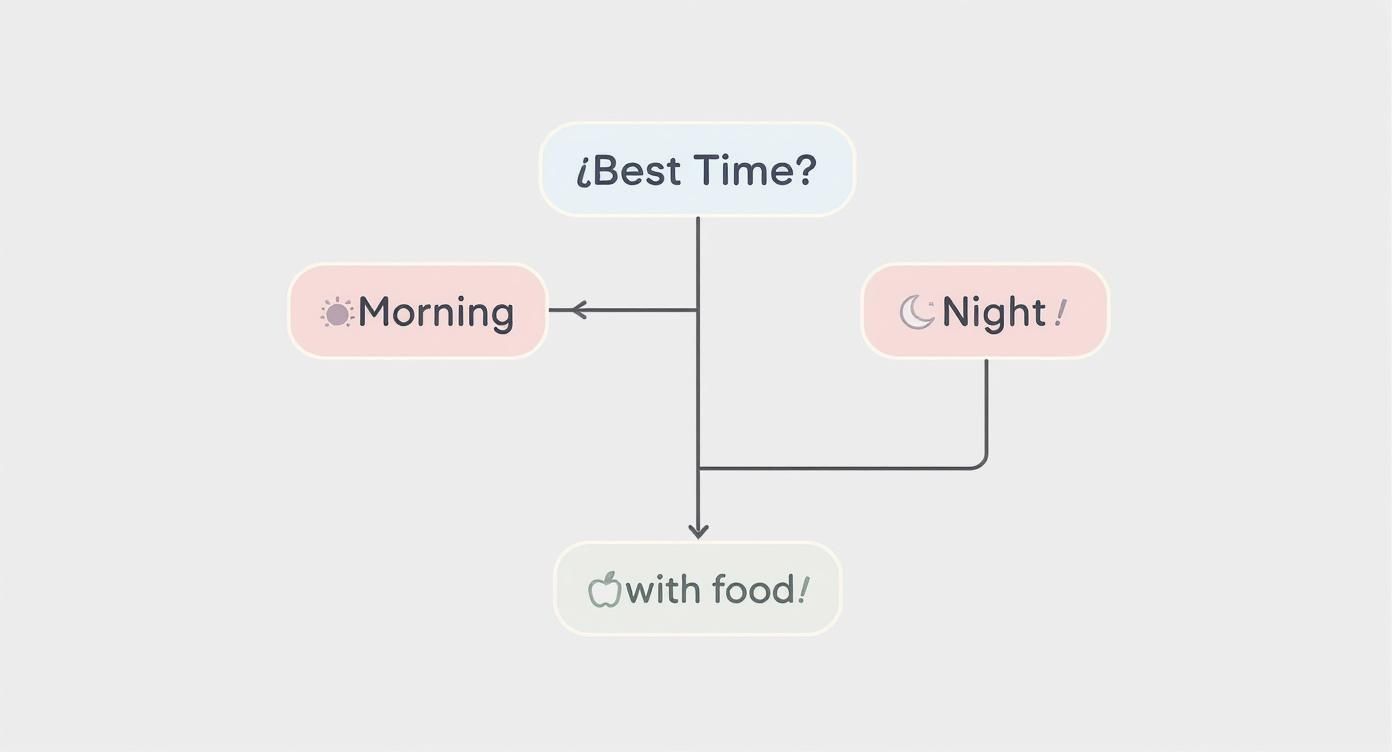
As you can see, morning or night doesn't matter nearly as much as the most important factor: taking it with food to buffer that harsh stomach acid.
Supporting Women’s Health Goals
You can also fine-tune your probiotic timing to target specific wellness goals, especially for women's health. Certain probiotic strains are fantastic for supporting vaginal and urinary tract health by helping maintain a balanced, healthy microbial environment.
For these long-term goals, consistency is everything. Taking your dose with the same meal each day provides a steady, reliable supply of beneficial bacteria where they're needed most.
For this kind of targeted support, you might look into specialized formulas like BioBloom Women's Probiotics, which contains strains specifically chosen for female wellness. Making it a non-negotiable part of your daily routine is the best way to create lasting support for your unique physiology.
Reading the Label: How Formulation Changes Timing
The advice to take probiotics with a meal is a fantastic rule of thumb, but it’s not set in stone. Think of it as the default setting—it works well for most, but not for every single product out there. The supplement world is always coming up with new and better ways to protect these delicate organisms, and those innovations can completely change the rules of the game.
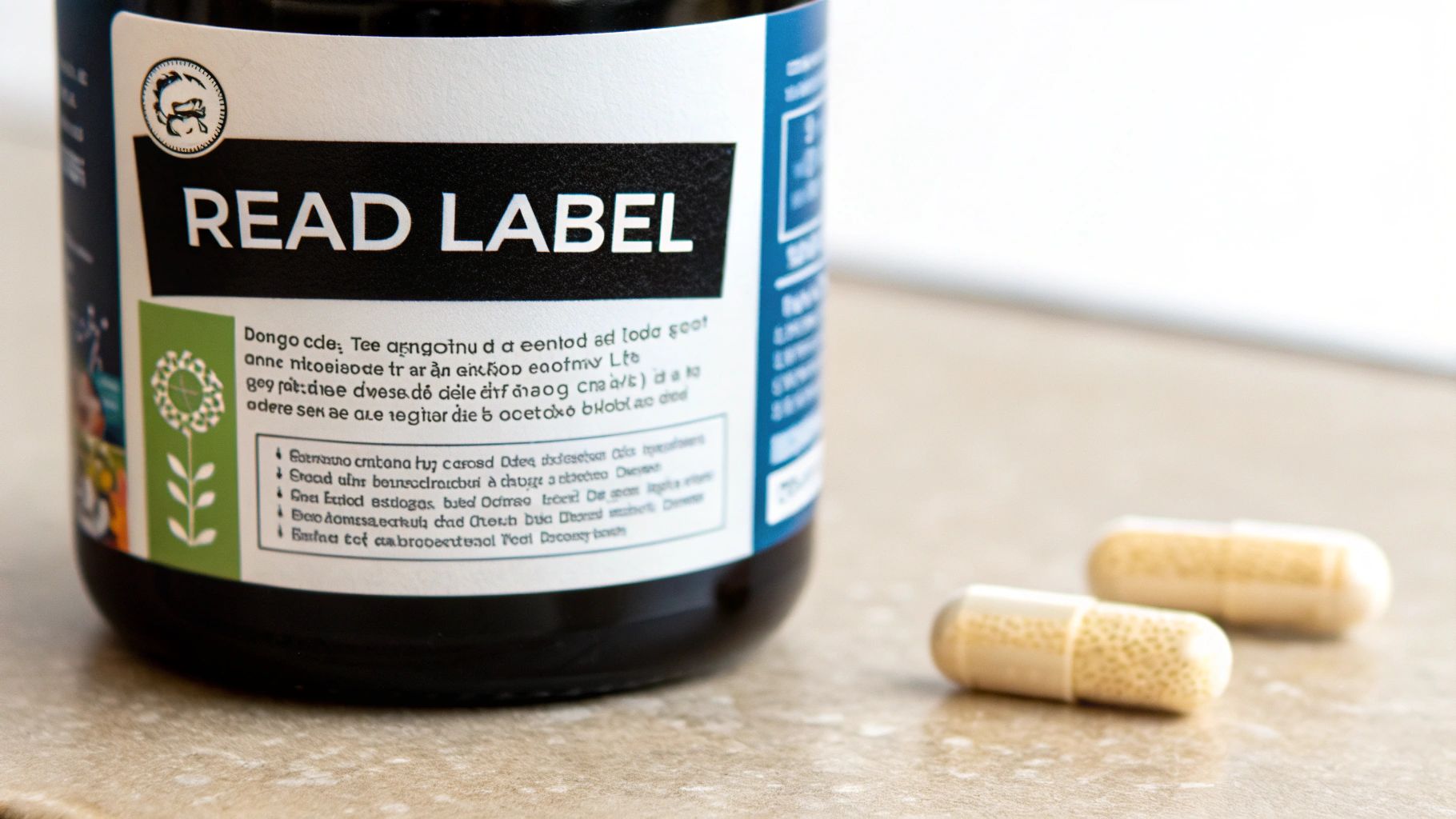
This is precisely why reading the label is your most important move. The manufacturer’s instructions aren't just suggestions; they're tailored to that specific product's design. If you ignore them, you could be undermining the very reason you're taking the supplement in the first place. Let’s break down what some of those terms on the bottle actually mean.
Armored Capsules: Delayed-Release Technology
One of the most common technologies you'll come across is the enteric-coated or delayed-release capsule. Picture these capsules as tiny, armored transport pods for the good bacteria. They’re built with a special coating designed to withstand the brutal acid bath of your stomach.
This clever bit of engineering allows the capsule to pass through the stomach completely unharmed. It only begins to dissolve once it reaches the much gentler, more alkaline environment of the small intestine, releasing its live passengers right where you want them.
When you see "enteric-coated" or "delayed-release" on a label, the manufacturer has already solved the stomach acid problem for you. For these products, taking them on an empty stomach is often perfectly fine—the capsule is doing all the protective work.
Naturally Hardy Probiotic Strains
Beyond fancy capsules, some probiotic strains are just naturally tough. They're the battle-hardened veterans of the microbial world, fully capable of surviving the perilous journey to your gut without needing a meal for protection.
Two great examples of these resilient strains are:
- Saccharomyces boulardii: This one is actually a beneficial yeast, not a bacterium, which makes it inherently resistant to stomach acid and even some antibiotics.
- Soil-Based Organisms (SBOs): You might also see these called spore-forming probiotics, like Bacillus coagulans. These strains can form a tough, protective shell (a spore) around themselves, allowing them to endure all sorts of harsh conditions.
Because of this built-in resilience, supplements that feature these kinds of strains often come with more flexible timing instructions. The product's formula is a huge piece of the puzzle, and a quick look at the label can tell you everything you need to know. For more tips, check out our guide on how to spot high-quality supplements.
With the global probiotics market expected to hit USD 115.13 billion by 2032, innovation is skyrocketing. Capsules and tablets already command 45% of the market, and as this sector grows, we’ll see even more specialized products. This makes it more critical than ever to understand what you're buying. You can dive deeper into the expanding probiotics market trends on fortunebusinessinsights.com. The bottom line is simple: always follow the instructions on the bottle for the best results.
Your Probiotic Questions, Answered
Even when you know the "why," the "how" can still be a bit fuzzy. As you start working probiotics into your routine, you'll inevitably run into real-world questions. What if I miss a day? Does it matter what I eat them with? Let's clear up some of the most common questions so you can feel confident in your daily habit.
It’s no surprise that people have questions. Probiotics are now the third most common supplement among adults in the U.S., but one survey found a staggering 57.5% of consumers still felt they needed more information. That tells me there's a big gap between buying a product and knowing how to use it right. You can dive deeper into the consumer insights on probiotics at technavio.com if you're curious.
For now, let's tackle the questions I hear most often.
Can I Take Probiotics on an Empty Stomach?
Generally, I'd say no—at least not for your average probiotic. When your stomach is empty, it's a highly acidic environment, like an acid bath that can wipe out a good portion of those beneficial bacteria before they even have a chance to get to your intestines. Taking them with a meal provides a much-needed buffer.
But there's a big "it depends." If your supplement's label boasts about delayed-release or enteric-coated capsules, you're in the clear. The same goes for exceptionally tough strains like the yeast Saccharomyces boulardii or spore-forming probiotics. These are specifically designed to withstand that harsh journey, so the food buffer isn't nearly as important.
Key Takeaway: Your product's label is your best guide. If it doesn't mention a special coating or a particularly hardy strain, play it safe and take your probiotic with food. You’re giving the bacteria their best shot at survival.
What Should I Do if I Forget a Dose?
First, don't worry about it. Forgetting a single dose is not a big deal. The real benefits of probiotics come from long-term, consistent use, and one missed day won't undo all your progress.
Just get back on track with your next scheduled dose. There is absolutely no need to double up to "catch up." Piling on an extra-large dose won't give you double the benefits, but it might lead to some temporary gas or bloating. Simply resume your normal routine.
Does the Type of Food Matter?
While any food is better than an empty stomach, you can definitely be strategic about it. Foods that contain a bit of healthy fat—think avocado, a handful of nuts, or a drizzle of olive oil—can actually help improve the survival rate of many probiotic strains.
Even better? Pair your probiotic with foods that are rich in prebiotics. Think of prebiotics as the fertilizer for your gut's garden. They are specific types of fiber that feed the good bacteria, helping them to flourish once they've arrived.
Try pairing your supplement with some of these prebiotic powerhouses:
- Oatmeal or whole grains to kickstart your morning with gentle fiber.
- Bananas or apples, which are easy to grab or blend into a smoothie.
- Onions, garlic, and leeks can easily be worked into your lunch or dinner.
How Long Should I Wait to Eat After Taking a Probiotic?
This is a great question. If you're someone who likes to take your supplements right before a meal, the sweet spot is anywhere from just before your first bite up to 30 minutes beforehand.
This timing ensures that food arrives shortly after the probiotic, raising the stomach's pH and creating that protective buffer. If you wait too long to eat after taking your capsule, you risk defeating the purpose, as the bacteria will be left to fend for themselves in that acidic environment. Keeping the window between your dose and your meal nice and short is the best way to maximize your supplement's impact.
At Premium Supplements, we're committed to providing high-quality, science-backed products to support your entire wellness journey. From targeted probiotics to essential vitamins and minerals, we make it easy to find exactly what you need. https://premiumsupplements.xyz
Article created using Outrank