

Picking between whey and egg protein really boils down to your specific goals, your budget, and any dietary restrictions you're working with. If you're looking for that lightning-fast recovery boost right after a workout, whey protein's rapid absorption rate is tough to beat. But, if you're sensitive to dairy or want a protein source that releases more slowly, egg protein is a fantastic choice.
Choosing Your Ideal Protein Supplement
Stepping into the world of protein powders can feel a bit overwhelming, but the whey versus egg protein decision usually comes down to a few key differences. Both are heavy hitters and are considered "complete" proteins, which means they pack all nine essential amino acids your body can't make on its own. These are the building blocks for muscle repair and growth.
Your choice will likely hinge on things like how fast your body digests it, whether you have any food sensitivities, and when you plan to take it. We're going to break down everything you need to know, side-by-side, so you can see past the marketing hype. We’ll look at the nitty-gritty of their nutritional stats, absorption speeds, and how they actually perform in the real world. Getting a handle on these details is the first step to building a supplement plan that truly works for you.
A good starting point is to think about your main goal. Are you all-in on muscle growth, or is finding a high-quality dairy-free option your top priority?
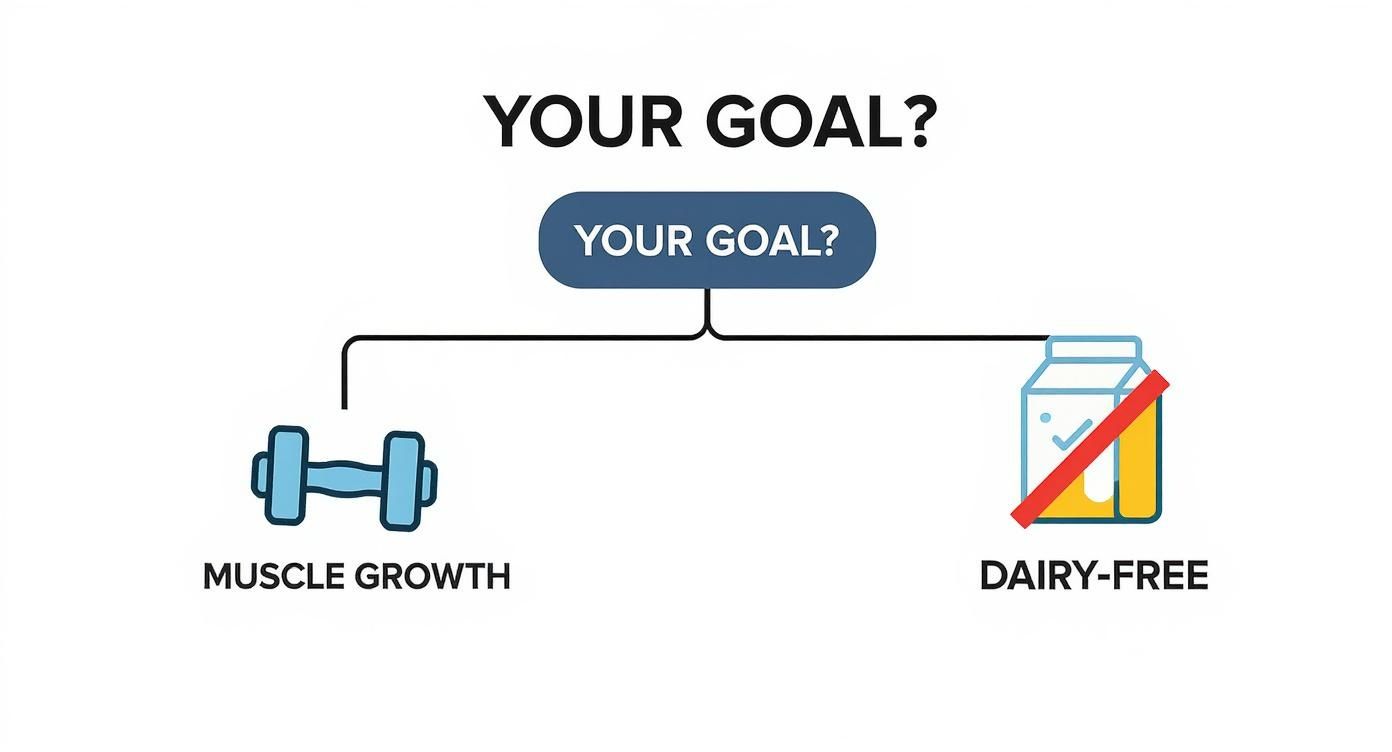
As you can see, while both are great for building muscle, your personal dietary needs—especially around dairy—play a huge role in which one is the right fit.
Quick Decision Guide Whey vs Egg Protein at a Glance
For a quick, high-level summary, here’s a table that lays out the core differences between whey and egg protein. Use this to get a fast read on which one might be a better match for you before we get into the more detailed comparisons.
| Attribute | Whey Protein | Egg Protein |
|---|---|---|
| Primary Source | Cow's Milk (Dairy) | Egg Whites (Albumen) |
| Digestion Speed | Very Fast | Moderate |
| Best For | Post-Workout Recovery | Sustained Release, Dairy-Free Diets |
| Lactose Content | Yes (in Concentrate) | No (Lactose-Free) |
| Amino Acid Profile | Excellent (High Leucine) | Excellent (High Biological Value) |
This simple breakdown gives you a solid starting point. While whey has long been the gold standard in the fitness world, egg protein has been steadily gaining ground. The global egg protein powder market was valued at an impressive USD 8.26 billion in 2022 and is expected to keep climbing. This growth is largely thanks to more people recognizing its benefits as a clean, highly effective, and easily digestible protein.
The best protein for you isn't always the most popular one on the shelf. It's the one that aligns with your body, your goals, and your lifestyle. That's the real secret to getting consistent results.
In the end, this is a personal choice that plays a part in your bigger health and wellness picture. For a broader look at how to build your supplement stack, you can explore the ultimate guide to choosing the right supplements for your lifestyle. Now, let's dive deeper into the specifics to help you make the most informed decision.
Comparing Nutritional and Amino Acid Profiles
When you're trying to decide between whey and egg protein, the first place to look is the nutrition label. This is where the small, yet crucial, differences start to pop up. Both are top-tier, high-quality proteins because they're "complete"—meaning they give you all nine essential amino acids (EAAs) your body can't make on its own. These are the literal building blocks for everything from muscle fiber repair to hormone regulation.
For decades, eggs were considered the gold standard of protein quality. They boast a perfect 100 on the Protein Digestibility-Corrected Amino Acid Score (PDCAAS), which cemented their status as an elite nutritional source. This score isn't just about having all the right aminos; it confirms that your body can actually absorb and use them efficiently.
Whey protein, which comes from the liquid separated from milk during cheesemaking, has an equally impressive profile. It's especially famous for its high concentration of Branched-Chain Amino Acids (BCAAs), the MVPs of muscle building.
The BCAA and Leucine Advantage
The three BCAAs—leucine, isoleucine, and valine—are unique because they directly stimulate muscle protein synthesis (MPS), which is the scientific term for building and repairing muscle. Leucine, in particular, is often called the "anabolic trigger" because it's the specific amino acid that signals your body to kickstart this process.
This is where whey often gets the nod for post-workout recovery.
- Whey Protein: Typically packs a higher amount of leucine, around 10-11% of its total amino acid content. This makes it incredibly good at jumpstarting muscle repair right after you train.
- Egg Protein: It's still loaded with BCAAs, but the leucine content is slightly lower, usually hovering around 8-9%. You still get a fantastic and complete amino acid profile, just without that pronounced leucine spike.
For an athlete whose main goal is to maximize that muscle-building signal immediately after a tough workout, whey's higher leucine content offers a clear advantage. That said, egg protein's steady and balanced profile is still incredibly effective for overall muscle growth and maintenance.
Macronutrient Breakdown: A Closer Look
Beyond the amino acid specifics, the overall macronutrient breakdown—protein, carbs, and fats—is a huge factor for most people. The exact numbers will shift a bit depending on whether you're looking at a whey concentrate or a purer isolate, but the general trends are pretty consistent.
Let's break down what you might find in a typical 30-gram scoop:
| Nutrient | Whey Protein Isolate | Egg White Protein Powder |
|---|---|---|
| Protein | ~25 grams | ~24 grams |
| Carbohydrates | 1-2 grams | 0-1 gram |
| Fat | 0-1 gram | 0 grams |
| Calories | ~110 calories | ~100 calories |
As the table shows, both are exceptionally lean. Egg white protein is about as pure as it gets, with virtually zero fat or carbs, making it a dream for anyone on a strict low-carb or low-fat diet. Whey isolate is right there with it, delivering a clean protein punch.
If you're leaning toward whey, you can explore a high-quality whey protein powder that fits this lean, fast-absorbing profile. In the end, you can't go wrong with either; both powders offer a powerful dose of protein with minimal extra calories, making them flexible tools for hitting your goals.
Understanding Digestion Speed and Absorption Rates
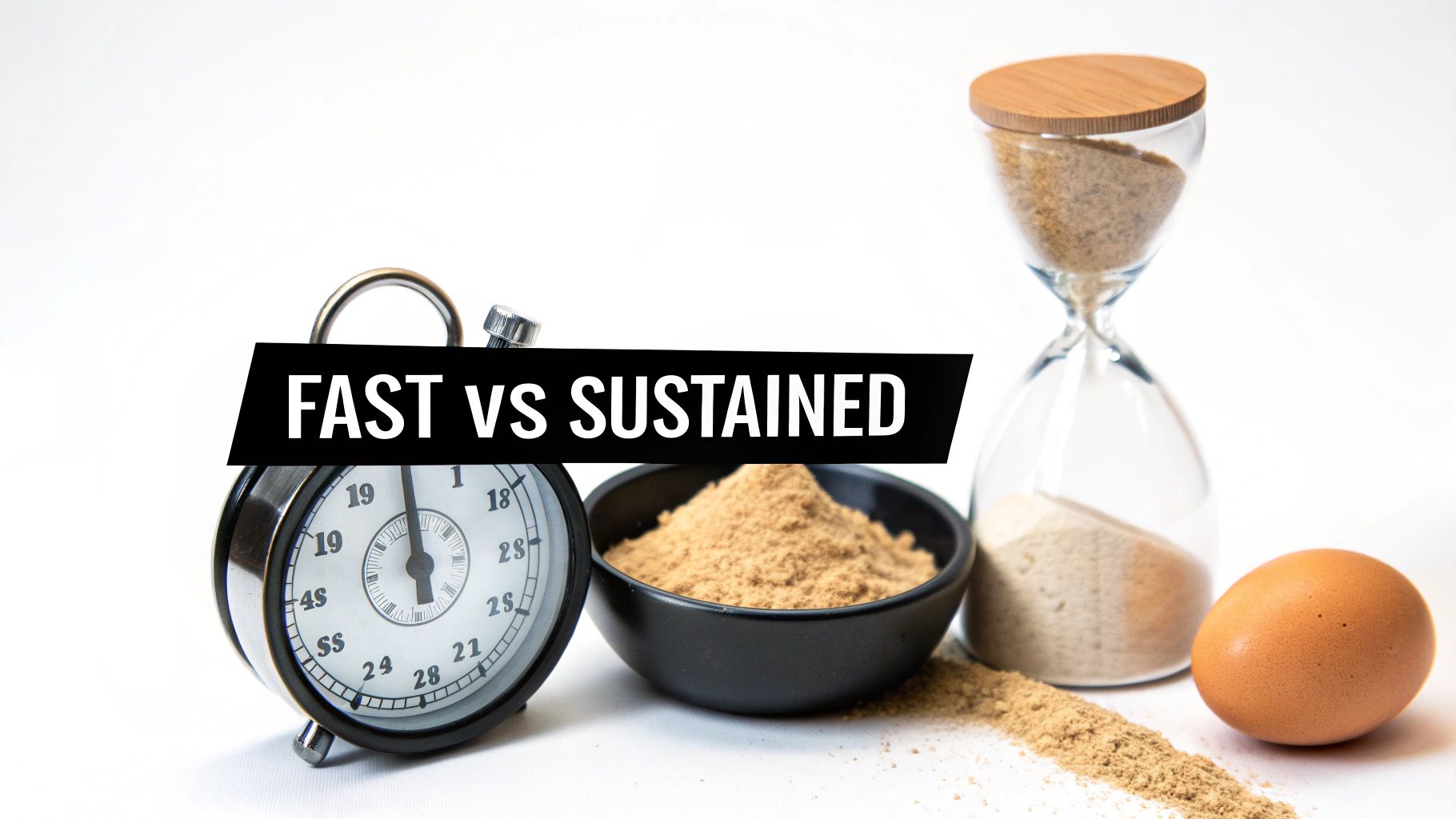
When you look past the nutrition label, one of the biggest differences between whey and egg protein is how your body actually uses them. It all comes down to speed. How fast a protein breaks down and gets into your bloodstream really determines the best time to take it.
Think of it this way: whey is like the high-octane fuel for a drag race—a quick, powerful burst. Egg protein is more like the steady fuel for a long road trip, providing consistent energy over time.
Whey Protein: The Fast-Acting Recovery Specialist
Whey protein is the undisputed king of speed. It’s incredibly soluble and easy for your body to break down, which means it floods your bloodstream with amino acids almost immediately.
This rapid delivery is perfect for the window right after a tough workout. Your muscles have just been put through the wringer, and they're starving for the nutrients needed to repair and rebuild. Whey's absorption peaks within 60 to 90 minutes, delivering those crucial building blocks right when your muscles are most receptive.
That quick hit, especially of the amino acid leucine, flips the switch for muscle protein synthesis (MPS), telling your body to get to work on recovery.
- Best Time to Use: Right after training, ideally within 30-60 minutes.
- Main Advantage: It sends a powerful signal to kickstart muscle growth when your body is primed for it.
- The Outcome: You get a jumpstart on recovery and muscle repair.
This is exactly why athletes and gym-goers have trusted whey for years. It’s built for one specific, critical job—post-workout recovery—and it excels at it.
Egg Protein: The Sustained-Release Workhorse
Egg white protein, on the other hand, takes a more measured approach. It digests and absorbs at a moderate pace, providing a steady, sustained release of amino acids into your system. It's not as slow as something like casein, but it's definitely not as fast as whey.
This slower drip-feed, which can take around 2 to 3 hours to fully absorb, prevents the sharp spike and subsequent crash you get with whey. Instead, you get a prolonged supply of protein to keep your muscles fed for longer. This is great for maintaining what’s called a positive nitrogen balance—a state where you're building more muscle than you're breaking down.
It’s not about which protein is better overall, but which is better right now. Whey is for immediate repair after a workout. Egg protein is for keeping your muscles consistently nourished throughout the day.
This steady-release nature makes egg protein a fantastic choice in a few key situations:
- Between Meals: To prevent muscle breakdown (catabolism) when you go a few hours without eating.
- Before Bed: To supply a slow and steady stream of amino acids for overnight repair.
- In Mixed Meals: To add a high-quality protein boost without causing a sudden spike.
Think of egg protein as your reliable, all-day muscle preserver. It perfectly complements whey's role as the fast-acting, post-workout specialist.
Impact on Muscle Growth and Athletic Performance
Theory and nutritional charts are one thing, but what really matters is how these proteins perform in the real world. When you’re putting in the work, you need a protein that delivers tangible results in muscle growth and athletic performance. Both whey and egg protein are top-tier choices, but they work in slightly different ways.
At the heart of muscle growth is a process called muscle protein synthesis (MPS). After you train, your muscle fibers are broken down, and MPS is the process of rebuilding them bigger and stronger using amino acids. A good protein powder's main job is to kickstart and fuel this process effectively.
Whey Protein: The Anabolic Trigger
Whey protein's claim to fame is its incredibly high concentration of leucine, one of the three Branched-Chain Amino Acids (BCAAs). Think of leucine as the primary switch that flips on MPS in your body.
Combine that potent leucine punch with whey's famously rapid absorption, and you have a perfect storm for immediate post-workout recovery. It gets those crucial amino acids into your system fast, right when your muscles are primed for repair. This is precisely why whey became the gold standard for that post-lift shake.
Whey is the ignition for muscle repair. Its speed and high leucine content turn the engine on right away, letting you take full advantage of that critical post-workout anabolic window.
Egg Protein: The Sustained Muscle Builder
Egg protein takes a different approach. It might not hit your system with the same initial speed as whey, but its real advantage is its steady, sustained-release profile.
Because it digests at a more moderate pace, egg protein delivers a consistent stream of all nine essential amino acids over a longer duration. This makes it an absolute workhorse for building and, just as importantly, preserving lean muscle mass throughout the day. It helps keep your body in a positive nitrogen balance—the ideal state for muscle growth—long after your workout is over.
- For Strength Athletes: The complete amino profile provides all the raw materials needed for consistent strength gains over time.
- For Bodybuilders: Its slower release is fantastic for preventing muscle breakdown (catabolism) between meals or overnight.
- For Endurance Athletes: It's great for repairing the slow-burn muscle damage that comes from long runs, rides, or swims.
Which Is Better for Your Goals?
So, who wins the whey vs. egg showdown? It’s not about a single winner; it's about picking the right tool for the job.
| Goal Scenario | Recommended Protein | Why It Works |
|---|---|---|
| Immediate Post-Workout Recovery | Whey Protein | Its fast absorption and high leucine content slam the gas pedal on muscle repair right when you need it most. |
| Sustained Muscle Maintenance | Egg Protein | The moderate digestion speed feeds your muscles for hours, making it perfect for between meals or before bed. |
| All-Around Daily Protein Boost | Either/Both | You can't go wrong here. Many experienced lifters use whey post-workout and egg protein at other times to cover all their bases. |
There's no denying whey's dominance in the market. In 2024, it holds an estimated 25% share of the global animal protein market, a testament to its proven effectiveness. Its ability to efficiently trigger MPS has made it a staple in countless fitness products. You can discover more insights about the animal protein market on Mordor Intelligence.
At the end of the day, both are elite protein sources. Whey gives you that immediate recovery kick, while egg provides the slow-and-steady support needed for long-term growth and preservation.
Navigating Allergies and Dietary Restrictions
For a lot of people, the choice between whey and egg protein has less to do with performance and more to do with how their body actually handles it. Allergies and food sensitivities aren't something you can ignore, and the wrong protein can cause serious digestive issues that get in the way of your goals.
The biggest hurdle with whey protein is almost always lactose intolerance. Lactose is the sugar in milk, and if your body doesn't produce enough of the lactase enzyme, you'll have a hard time digesting it. That can lead to bloating, gas, and an upset stomach. It's important to remember this is different from a true milk allergy, which is a more severe immune reaction.
Whey Protein Options for Lactose Sensitivity
If you're just sensitive to lactose, you don't necessarily have to ditch whey. The key is to look at the type of whey protein you're buying, as the processing makes a huge difference.
- Whey Concentrate: This is the most basic form and has the most lactose. If you have any sensitivity at all, this one will probably give you trouble.
- Whey Isolate: This version goes through extra filtering to remove most of the lactose and fat. Many people with mild lactose intolerance find they can drink whey isolate just fine.
- Whey Hydrolysate: Often called "pre-digested," the protein here is broken down into smaller pieces. It has virtually no lactose and is incredibly easy on the stomach.
By opting for a high-quality whey isolate or hydrolysate, you can often get all the muscle-building benefits without the digestive backlash.
Egg Protein: The Premier Dairy-Free Alternative
If you need to avoid dairy completely, egg white protein is a fantastic solution. Because it comes from eggs, it's 100% naturally free of lactose, casein, and any other milk components. This makes it a clean, reliable choice for anyone with lactose intolerance or a milk allergy.
Egg white protein offers a straightforward path to high-quality protein supplementation without the digestive gamble that dairy-based products can present. It eliminates the need to decipher processing methods, providing a reliable, bloat-free experience.
Of course, you have to consider egg allergies. While not as common as lactose issues, a true egg allergy means egg protein is completely off the table. But for everyone else looking for a gut-friendly alternative, it's a stellar pick. It’s also naturally free from gluten and soy, so it fits easily into many other types of diets.
This simplifies the decision quite a bit. If dairy is a no-go, egg protein is your answer. If you're simply looking to avoid extra fillers and want other clean options, you might even explore something like a clear plant-based protein and hydration powder. At the end of the day, listening to your body is the best way to choose a supplement that will actually help you.
Taste, Cost, and Usability: The Real-World Decision
Let's be honest. All the nutritional science and amino acid charts in the world don't matter if you won't actually use the protein powder. The best supplement is the one you can stick with day in and day out. This is where practical factors like taste, mixability, and price come into play, and they often draw the clearest line between whey and egg protein.

A powder can have a "perfect" profile on paper, but if you have to choke it down, it's just going to end up gathering dust in your pantry. Your daily experience with a product is just as important as the science behind it.
Flavor Profile and Texture
The first thing you'll notice is the taste and mouthfeel, and the difference is pretty stark. Thanks to its dairy origins, whey protein has really set the gold standard in this department.
Whey powders are famous for their creamy, smooth texture and a generally neutral, slightly milky base flavor. This makes them incredibly versatile. You can toss a scoop into a shake, a smoothie, or even your morning oatmeal, and it blends right in without taking over. The market is also flooded with flavored whey options that, for the most part, taste pretty good.
Egg white protein, on the other hand, has a... personality. Unflavored versions can carry a slightly savory, almost "eggy" note that some people just don't enjoy in a simple shake with water. Flavors do a decent job of masking this, but the texture is often thinner and can get noticeably foamy when you shake it up.
For pure drinking enjoyment and versatility, whey protein generally has the edge. Its creamy consistency and mild taste make it an easy addition to almost any routine, which is a major reason for its popularity.
Mixability and Convenience
Convenience is everything, especially when you’re tired after a workout and just want a quick, no-fuss shake. How well the powder dissolves in liquid—its mixability—is a huge part of that.
Again, whey protein tends to take the lead here. Good quality whey isolate and hydrolysate are engineered for high solubility. They dissolve almost instantly in a shaker bottle with just a few good shakes, leaving you with a smooth, clump-free drink. No blender required.
Egg white protein can be a bit more finicky. It has a real tendency to foam up when you shake it vigorously, and it can sometimes leave behind stubborn clumps that refuse to break down. You can get around this by using a blender or just letting the foam settle for a minute, but it's not quite as "shake-and-go" as its dairy-based rival.
Cost and Value Comparison
For most of us, budget is a real consideration. When you're comparing the cost of whey versus egg protein, the key is to look at the price per gram of protein, not just the sticker price on the tub.
Whey is a byproduct of the cheese-making industry, and that massive scale of production makes it the more affordable option, hands down. You can almost always find whey concentrate or isolate for a lower cost per serving.
Egg white protein is a more niche product. The process of separating, pasteurizing, and dehydrating egg whites into a fine powder is simply more involved and expensive, and that cost gets passed on to you.
- Whey Protein: The budget-friendly workhorse. It offers fantastic value, making it accessible for daily or high-volume use without breaking the bank.
- Egg Protein: A premium-priced alternative. People usually choose it out of necessity—like avoiding dairy—rather than for its cost-effectiveness.
Ultimately, your choice has to balance the science with these practical, everyday factors. While whey often wins on taste, texture, and price, egg protein’s real value shines for those who need a high-quality, dairy-free powerhouse and are willing to pay a bit more for it.
Answering Your Top Questions About Whey vs. Egg Protein
Even with all the data, you might still be on the fence. That’s perfectly normal. Choosing a supplement is a personal decision, and the little details can make all the difference. Let's tackle some of the most common questions people ask when they're stuck between whey and egg protein.
We'll get into the practical stuff—like combining them, using them in the kitchen, and what to really expect for your digestion. The goal here is to clear up any lingering confusion so you can pick the right one for you with total confidence.
Can I Use Both Whey and Egg Protein in My Diet?
Not only can you, but it's actually a pretty smart strategy. Think of them as two different tools in your nutritional toolbox. Using both lets you play to their individual strengths for better results around the clock.
Here’s a common and effective way to do it: use a fast-digesting whey protein right after your workout. That quick hit of amino acids, especially leucine, is exactly what your muscles are screaming for to kickstart the repair process.
Then, you can bring in the egg protein at other times. Its slower, more sustained release is perfect for a morning smoothie that keeps you full, a shake between meals to stave off hunger, or even before bed to feed your muscles a steady supply of nutrients while you sleep. This one-two punch covers all your bases—immediate recovery and long-term muscle support.
Is Egg White Protein Better Than Eating Whole Eggs?
This isn't really a "better or worse" situation; it's about picking the right tool for the job. They serve completely different purposes.
Egg white protein powder is your specialist. It’s a super-concentrated, low-fuss source of pure protein with almost no fat or cholesterol. That makes it the perfect choice when you just want to spike your protein intake—like in a post-workout shake or when adding a scoop to your oatmeal—without adding a lot of extra calories.
Whole eggs, on the other hand, are the complete package. The yolk is a nutritional powerhouse, delivering not just protein but also vital nutrients like choline (which is fantastic for brain health), vitamin D, and healthy fats. Your choice really comes down to what you need in that specific moment.
Think of it this way: egg white protein is the isolated specialist for muscle repair, while a whole egg is the well-rounded generalist for overall nutrition.
Does Whey Protein Cause More Bloating Than Egg Protein?
This is a huge concern for many people, and the answer almost always comes down to one word: lactose. If you have any level of lactose intolerance, whey protein concentrate can definitely cause bloating, gas, and an upset stomach because it contains the most milk sugar.
But not all whey is the same.
- Whey Isolate and Whey Hydrolysate go through extra filtering that removes most of the lactose. A lot of people with mild sensitivity find they can handle these just fine.
- Egg Protein is naturally 100% dairy-free, full stop. This makes it a go-to for anyone who gets digestive grief from lactose or has a full-blown milk allergy.
Bottom line: if you know you're sensitive to dairy, egg protein is the safer bet. If you have no issues with lactose, a quality whey product shouldn't cause you any more trouble than egg protein would. It all comes down to knowing your own body.
Which Protein Is Better for Baking and Cooking?
You can get both to work in the kitchen, but they behave very differently. When it comes to all-around versatility for cooking and baking, unflavored egg white protein usually comes out on top.
It has natural binding and leavening properties that work wonders for the texture of things like homemade protein bars, pancakes, and muffins. It helps create a lighter, fluffier result that whey protein often can't match.
Whey can definitely be used in recipes, but it tends to make things denser and can sometimes result in a dry or chewy texture if you don't balance it with enough moisture. If you're a serious home baker looking to create high-protein treats, egg white protein is generally the more reliable and forgiving choice.
Ready to choose the perfect protein to fuel your fitness journey? At Premium Supplements, we offer a curated selection of high-quality, science-backed supplements to meet your unique needs. Whether you're looking for fast-acting whey or a premium dairy-free alternative, you'll find clean, effective options to support your goals. Explore our full range of products today and experience the difference that quality makes. Shop now at Premium Supplements.
Article created using Outrank