

Nothing ruins a post-workout high faster than a lumpy protein shake. We’ve all been there—that gritty, chalky texture that makes you question your life choices. The good news is that a perfectly smooth, enjoyable shake isn't some secret art form. It really just comes down to having the right tools and a little know-how.
Whether you're at the gym, in your kitchen, or at the office, there's a method that works. It's all about understanding what causes those dreaded clumps and how to avoid them from the start. From the order you add your ingredients to the temperature of your liquid, small tweaks make a massive difference.
Your Guide to a Clump-Free Protein Shake
This guide cuts through the noise and gives you practical, easy-to-follow advice to fix your shake-making game for good. Let’s dive into the different methods and find the one that fits your routine.
Quick Guide to Protein Powder Mixing Methods
First things first, let's look at the tools of the trade. Each one has its own strengths and weaknesses, and the best choice often depends on where you are and what you're trying to make.
This table breaks down the most common options so you can see at a glance which one is right for you.
| Mixing Method | Best For | Pros | Cons |
|---|---|---|---|
| Shaker Bottle | Speed, convenience, and on-the-go mixing. The gym-goer's essential. | Fast, portable, and a breeze to clean. | Can sometimes leave small clumps, especially with thicker powders. |
| Blender | Creating the absolute smoothest shakes and adding extras like fruit, spinach, or ice. | Delivers a perfectly silky texture; ideal for complex smoothies or meal replacements. | Requires more cleanup and isn't portable. |
| Hand Whisk | A quick, simple mix at home or in the office when you don't have other tools. | Super simple and requires no special gear. | Not very efficient; can get messy and takes some elbow grease. |
Choosing the right tool is a great first step, but technique is just as important for getting that perfect consistency.
Protein powders are, by far, the most popular type of protein supplement, making up about 55.11% of the global market in 2024. This isn't surprising given how versatile and budget-friendly they are. Thanks to innovations in food science, like extrusion porosification technology (EPT), powders dissolve better than ever, which means a smoother mix and better taste, particularly with whey proteins. You can read more about the protein supplement market on Mordor Intelligence.
My Single Best Tip: If you remember nothing else, remember this: always put your liquid in first. This one simple habit prevents powder from getting stuck in the bottom corners of your shaker, which is the number one cause of clumps. A supplement funnel can also be a lifesaver for getting the powder in without making a mess.
Choosing the Right Tool for a Perfect Blend
Let's be honest, the biggest reason a protein shake turns out lumpy or just plain wrong is the tool you use to mix it. Your choice really boils down to what you value more in that moment: convenience, speed, or a perfectly smooth texture. Getting it right is all about matching the tool to the situation.
This little flowchart breaks down the choice between the two most popular methods. It’s a great visual for deciding what you need on the fly.
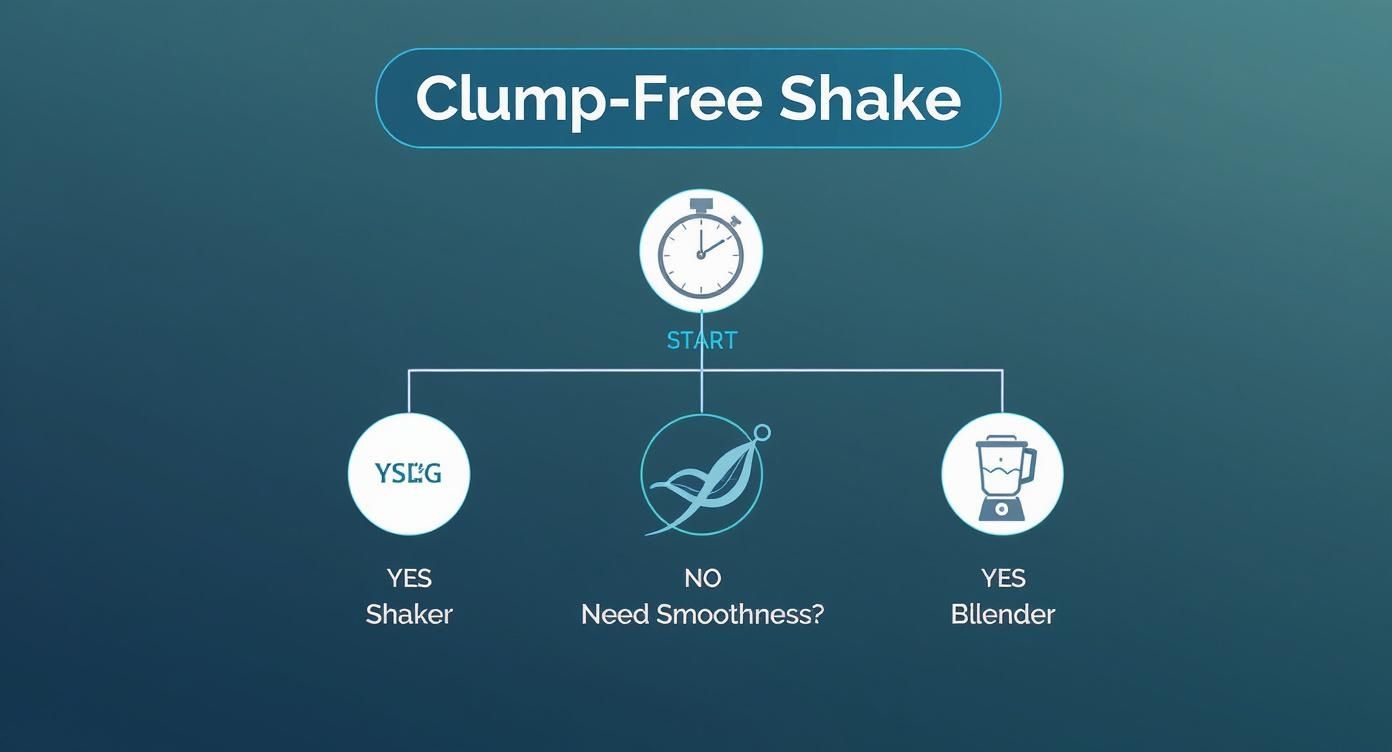
As you can see, if you’re short on time, a shaker bottle is your best bet. But if a silky-smooth texture is what you're after, nothing really tops a blender.
The Classic Shaker Bottle
For most of us, a shaker bottle is the workhorse. It’s portable, cheap, and gets the job done fast, which is exactly what you need at the gym or in the office. The magic is in that little mixing element inside—usually a wire whisk ball or a plastic screen—that’s designed to smash clumps apart.
The trick is how you shake it. A lazy, side-to-side swirl isn't going to cut it; that just pushes the powder around. You need a strong, up-and-down shaking motion for a good 30 seconds. Seriously, put some energy into it. A powerful shake is what forces the powder and liquid to combine properly.
The Power of the Blender
When texture is everything, the blender is your best friend. It’s the only way to get that genuinely creamy, milkshake-like consistency, especially when you start adding other ingredients like frozen fruit, spinach, or a scoop of oats.
You've got a few options here:
- High-Powered Blenders: Think Vitamix or Blendtec. These beasts will obliterate just about anything, giving you a flawlessly smooth drink every time. They're perfect for those thick, meal-replacement smoothies packed with tough stuff like nuts and fibrous greens.
- Personal Blenders: These are fantastic for simpler shakes. If you’re just mixing powder, liquid, and maybe some soft fruit like a banana, this is all you need. They’re super quick, and the blending jar often doubles as a to-go cup, which means less washing up.
- Immersion Blenders: Also called a stick blender, this tool is a dark horse. Just pop it into a tall cup with your ingredients and blend. It’s a great middle-ground option that offers a pretty smooth result with almost no cleanup.
A blender’s power really shines when you’re working with plant-based or egg white proteins, which can have a notoriously gritty texture. If you want to dive deeper into how different powders behave, check out our guide comparing whey vs egg protein.
When You're in a Pinch
No shaker? No blender? Don't sweat it. You can still whip up a decent shake with basic kitchen tools, it just takes a bit more elbow grease.
The old "fork-in-a-glass" method can work surprisingly well, but there’s a technique to it. You have to start by making a paste. Add your protein powder to a glass, then pour in just a tiny bit of your liquid—only enough to get the powder wet.
Now, use a fork or a small whisk to mash and stir that mixture into a thick, smooth paste. This first step is where you break down any potential clumps before they form. Once it's completely smooth, you can slowly pour in the rest of your liquid while continuing to stir. This two-step process makes all the difference when you're mixing by hand.
Mastering Liquid Ratios and Temperature
You can have the best shaker bottle in the world, but if you get the liquid wrong, you're still in for a lumpy ride. The real secret to a perfectly smooth shake comes down to two simple things that most people overlook: how much liquid you use and its temperature. Get these right, and you'll say goodbye to gritty, disappointing protein shakes for good.
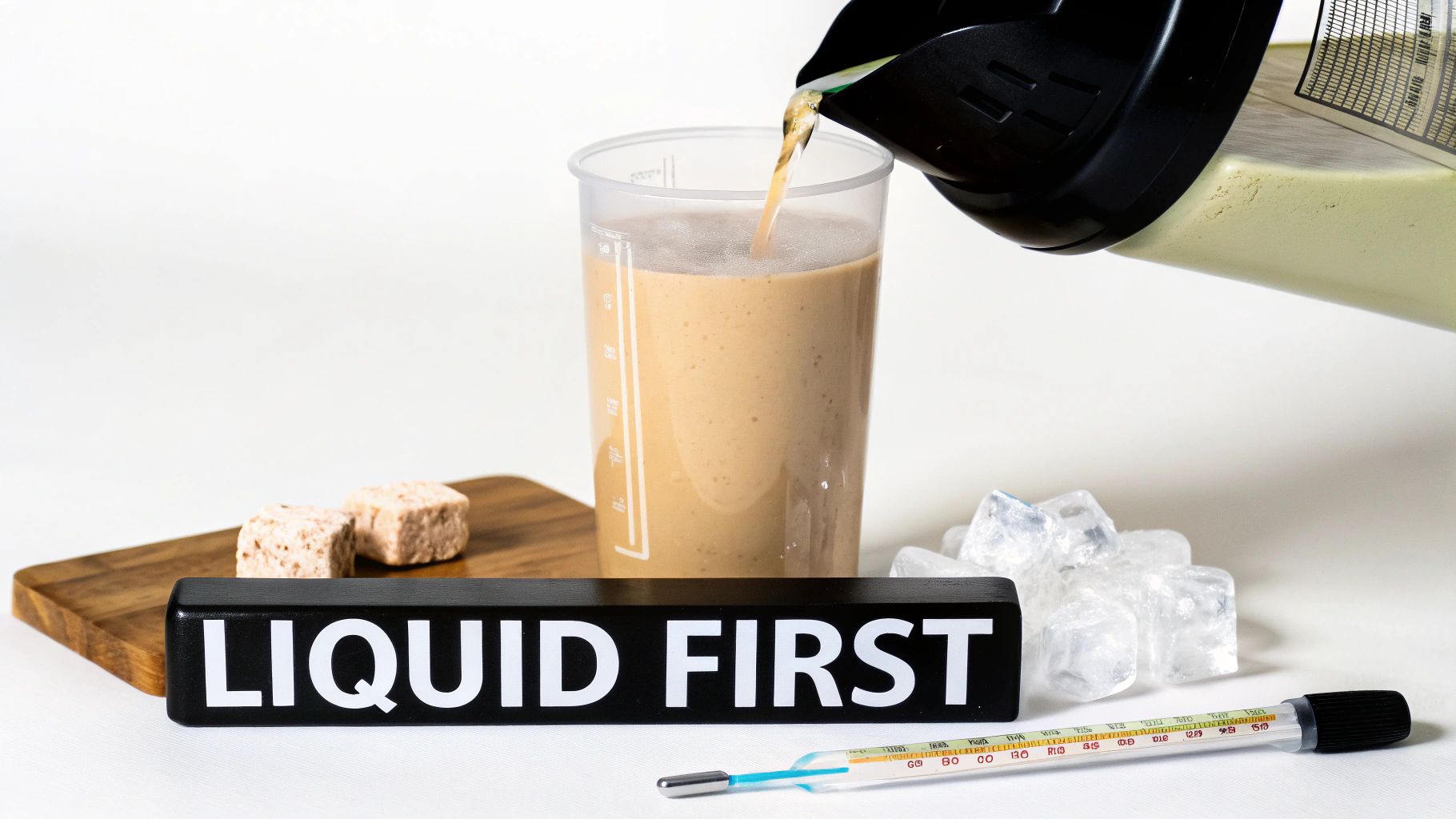
If you take away only one tip, let it be this: liquid goes in the shaker first. Always. When you dump the powder in an empty shaker, it immediately gets packed into the bottom corners, forming a dry, dense layer that even the most vigorous shaking can't fix. By starting with the liquid, you give the powder a chance to disperse and dissolve the moment it hits the water.
Finding Your Perfect Ratio
The amount of liquid you use is all about personal preference and directly controls the thickness and feel of your shake. While there's no single magic number, a solid starting point is 8–12 oz (250–350 ml) of liquid per scoop of protein powder. This range usually gives you a nice, balanced consistency that’s easy to drink.
- Want a thinner, more refreshing drink? Go with more liquid, somewhere in the 12–16 oz range. This works especially well for lighter formulas like our plant-based clear protein powder, which is designed to feel more like a hydrating juice.
- Craving a thicker, creamier shake? Use less liquid, maybe 6–8 oz. This is perfect when you're aiming for that rich, milkshake-like texture.
Whey protein, the most common type, comes from the liquid left over from cheesemaking. It’s popular because it dissolves well and digests quickly, which is why the standard 250-350 ml of liquid is so effective—it creates a great texture and helps your body absorb those amino acids after a workout. For a deeper dive, you can learn more about protein powder science at Colorado State University.
A lesson from experience: I once tried mixing a thick casein protein with only 6 oz of water, hoping for an extra-creamy result. Instead, I got a paste so thick it wouldn't even pour. The next day, I upped it to 12 oz, and it was perfect. The lesson? Don't be afraid to tweak the amount until you find the sweet spot for your specific powder.
The Critical Role of Temperature
This is a big one. Temperature has a huge impact on how well your protein powder dissolves. For the absolute smoothest results, you should always stick to cold or room-temperature liquids.
Cold water, milk, or a plant-based alternative helps keep the protein particles separate, allowing them to dissolve evenly. It's the most foolproof method for preventing clumps, particularly when you're just using a basic shaker bottle.
On the other hand, dumping protein powder straight into a hot liquid like coffee is a recipe for a clumpy disaster. The heat causes proteins like whey to denature—a fancy word for "cook"—almost instantly. You're left with rubbery chunks that are impossible to break up. If you really want to add protein to something hot, first mix the powder with a small amount of room-temperature liquid to create a smooth paste. Then, you can slowly stir that paste into your hot beverage.
Troubleshooting Common Mixing Problems
Even when you do everything by the book, sometimes a protein shake just doesn't cooperate. A few classic frustrations can get in the way of a perfect drink, but the good news is they all have pretty simple fixes. Once you understand what causes these hiccups, you're on your way to making a consistently great shake every single time.
We've all been there—from stubborn clumps that just won't dissolve to a mountain of foam that creates a bizarre texture. These are almost always easy to solve with a small tweak to your method or ingredients.
Conquering the Dreaded Clumps
You followed the "liquid first" rule and shook your bottle like you were trying to win a prize, but you still end up with dry pockets of powder. It's probably the most common complaint out there, and thankfully, a couple of small changes can make all the difference.
If you're using a blender, the answer is usually just a bit of patience. Instead of dropping the whole scoop in at once, try adding the powder slowly while the blender is already running on its lowest setting. This lets the powder sift into the liquid, allowing each particle to get wet individually instead of clumping together. For shaker bottles, simply fluffing up the powder in the tub with a fork before you scoop it can break up any compacted bits.
Banishing Excessive Foam
Ever blend a shake only to find the top third is nothing but foam? This happens a lot with whey isolate and hydrolyzed whey proteins. Their ultra-fine particles get whipped up with air really easily during high-speed blending. It’s totally harmless, but it can be a pain to drink through.
Here are a few tricks I use to knock down that foam:
- Let It Settle: Seriously, just walk away for a minute or two after blending. Most of the foam will collapse on its own.
- Add a Little Healthy Fat: A small splash of MCT oil or even a tiny piece of avocado changes the liquid's surface tension, preventing so many bubbles from forming in the first place.
- Blend on Low: High speed is the enemy here. A lower blender setting will still mix everything perfectly but won't create that powerful vortex that sucks in so much air.
Pro Tip: If foam is your constant nemesis, especially with whey isolate, switch to a shaker bottle. Shaking by hand introduces way less air than a blender's blades, and it often solves the problem completely.
Fixing a Chalky or Gritty Texture
That unpleasant, gritty mouthfeel is a well-known issue, especially with plant-based proteins like pea, rice, or hemp. It’s not your fault—their natural texture just doesn't dissolve as smoothly as milk-based proteins like whey or casein. While you can't change the nature of the protein itself, you can absolutely improve the final result.
The secret is to add something that brings in a creamy, smooth texture to cover up the grit. Blending in half a banana, a big spoonful of Greek yogurt, or a quarter of an avocado works wonders. These ingredients act as emulsifiers, creating a silky-smooth consistency that makes the shake genuinely enjoyable to drink.
Creative Ways to Use Protein Powder
If you think protein powder is only for shaker bottles, you're missing out on a whole world of delicious possibilities. Treating it as just a drink ingredient is like thinking of flour as only for bread; it’s a powerful tool for boosting your daily nutrition in some surprisingly tasty ways.
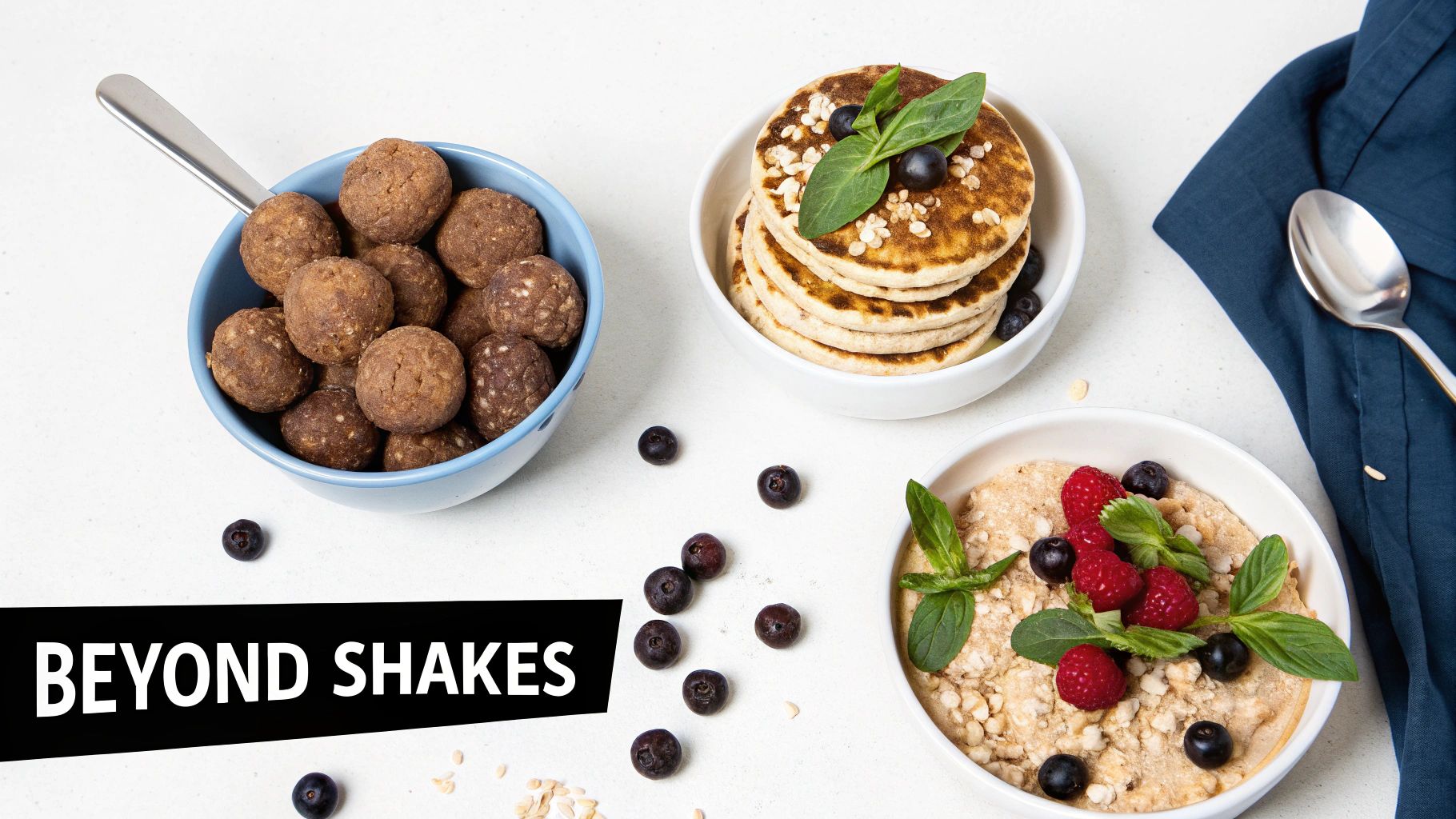
This kind of culinary creativity is a huge reason the industry is exploding. The global protein powder market is projected to skyrocket from USD 28.8 billion in 2025 to a massive $59.9 billion by 2035. That growth isn't just from people chugging post-workout shakes; it reflects a bigger shift toward incorporating protein into everyday meals with plant-based milks, fruits, and healthy fats. You can dive deeper into these trends with the protein powder market report from Future Market Insights.
Power Up Your Breakfast
The morning is the perfect time to start experimenting. Adding a scoop of protein to your breakfast keeps you feeling full and energized, helping you dodge that classic mid-morning energy crash.
One of the easiest upgrades is making "proats"—protein oatmeal. Here’s the key: stir the powder in after cooking. If you add it while the oatmeal is still on the heat, whey protein can get clumpy and weirdly textured. Just cook your oats as you normally would, let them cool for a minute, and then stir in a scoop of vanilla or chocolate powder until it's perfectly smooth.
Pancakes and waffles are another great candidate. A scoop of unflavored or vanilla protein can be mixed right into your favorite batter. Just be ready to add a splash more liquid, as the powder will definitely thicken things up.
Real-World Example: My go-to quick breakfast is a scoop of vanilla whey mixed into plain Greek yogurt. I top it with a handful of berries and some chopped nuts. It turns into a high-protein, dessert-like bowl that takes less than two minutes to throw together, and the powder dissolves perfectly into the thick yogurt.
Baking and No-Bake Treats
Baking with protein powder can be a bit of a science experiment, but the results are worth it. Protein powder is incredibly absorbent, so it has a tendency to make baked goods dry if you don't adjust the recipe.
A solid rule of thumb is to replace no more than one-third of the flour with protein powder. You'll almost always need to bump up the wet ingredients—think milk, applesauce, or yogurt—to keep everything moist.
If you want a foolproof option, no-bake treats are your best friend. Protein energy balls are a classic for a reason.
- In a bowl, combine 1 cup of oats, ½ cup of peanut butter, ⅓ cup of honey, and 1-2 scoops of your favorite protein powder.
- If the mixture feels too dry to handle, add a splash of milk.
- Roll it all into bite-sized balls and pop them in the fridge. They're perfect for a grab-and-go snack.
Savory and Unexpected Uses
Don't box yourself into just sweet recipes. Unflavored protein powder can be a secret weapon for boosting the nutrition of savory dishes without messing with the flavor.
Try stirring it into soups or sauces, where it can even double as a thickener. The trick is the same as with hot coffee: you have to make a slurry first. Mix your powder with a little bit of cold water or broth to form a smooth paste, then slowly whisk that paste into your warm soup. This simple step prevents clumps and gives you a perfectly smooth, protein-packed result.
Flavor Pairings for Protein Powder
Finding the right flavor combination can make all the difference. While water is always an option, pairing your powder with the right liquid and mix-ins can turn a basic shake into a delicious treat. Here are a few ideas to get you started.
| Protein Flavor | Best Liquid Pairings | Creative Mix-in Ideas |
|---|---|---|
| Vanilla | Almond milk, oat milk, cold brew coffee, orange juice | Frozen berries, spinach, almond butter, cinnamon, Greek yogurt |
| Chocolate | Whole milk, coconut milk, cold brew coffee | Banana, peanut butter, avocado (for creaminess), mint extract |
| Strawberry | Cashew milk, coconut water, regular milk | Frozen banana, fresh basil, lime zest, white chocolate chips |
| Unflavored | Any liquid works | Use in savory soups, oatmeal, mashed cauliflower, or coffee |
| Coffee/Mocha | Oat milk, almond milk, water | A shot of espresso, cocoa powder, a pinch of sea salt, ice |
These are just jumping-off points. Don't be afraid to experiment with different fruits, nut butters, spices, and even veggies to find what you like best. The right combination can completely transform your protein routine.
Common Questions About Mixing Protein Powder
Even after you've got your technique down, a few questions always seem to come up. I've heard these hundreds of times, and getting the right answers can be the difference between a frustrating shake and a perfect one. Let's clear up some of the most common hangups.
Can I Mix Protein Powder with Hot Liquids Like Coffee?
You absolutely can, but there's a trick to it. If you just dump a scoop of protein, especially whey, directly into your morning coffee, you'll end up with a clumpy, rubbery disaster. The heat instantly "cooks" the protein, and no amount of stirring will save it.
Here’s how to do it right: create a slurry first.
- Add your scoop of protein powder to your mug.
- Pour in just a tiny bit of room-temperature liquid—water or milk is perfect—and stir it into a thick, smooth paste.
- Now, slowly pour your hot coffee into that paste while you keep stirring.
This method gently brings the protein up to temperature, letting it dissolve into your drink instead of seizing up. I've found that most plant-based proteins are a bit more forgiving with heat, but this technique is still the gold standard for a lump-free result every time.
Why Is My Protein Shake So Foamy and How Can I Stop It?
That big, airy head of foam on your shake is almost always caused by high-speed blending. When those blades spin like a jet engine, they whip a ton of air into the liquid. Whey protein isolate is particularly notorious for this. While the foam won't hurt you, drinking your way through an inch of it is just plain annoying.
To get rid of the foam, you have a few easy options:
- Just wait. Let the shake sit on the counter for a minute or two. Gravity will do its thing, and most of that foam will dissipate on its own.
- Add a touch of fat. A splash of MCT oil or even a small chunk of avocado can break the liquid's surface tension, which helps prevent all those bubbles from forming in the first place.
- Blend on low. You don't always need to go full throttle. A lower blender speed will still mix everything perfectly but without creating that powerful vortex that traps so much air.
Honestly, if you really hate foam, a shaker bottle is your best bet. The simple act of shaking by hand introduces way less air than a blender, solving the problem from the get-go.
Is It Better to Mix Protein Powder with Milk or Water?
This is probably the most-asked question, and the answer is simple: it depends entirely on your goals and your taste. One isn't magically "better" than the other; they just do different things.
- Water: Choose water when you want fast absorption and minimal calories. It's the ideal choice for a post-workout shake because it rushes protein to your muscles without adding extra fats or carbs.
- Milk (or a plant-based alternative): Using milk turns your shake into a much creamier, richer, and more filling drink. It adds extra protein and calories, making it perfect if you're trying to gain mass or need a satisfying meal replacement.
At the end of the day, pick the liquid that fits your nutritional plan and makes you actually want to drink your shake.
Can I Pre-Mix My Protein Shakes for the Next Day?
You can, but I usually advise against it. While the convenience is tempting, letting a shake sit overnight can cause some of the delicate nutrients to degrade. More importantly, the texture will almost certainly change—it might get thicker, sludgier, or separate into layers.
If you absolutely have to prep in advance, make sure it’s in a tightly sealed container in the fridge for no more than 24 hours. Just know that it will separate, which is totally normal. You'll need to give it another very vigorous shake right before you drink it to get it back to a decent consistency. For the best taste and smoothest texture, nothing beats mixing it fresh.
Ready to create the perfect shake every time? The journey to a clump-free, delicious protein experience starts with high-quality ingredients. Premium Supplements provides a curated selection of top-tier protein powders and wellness essentials to support your fitness goals.
Explore our collection and find your perfect match at premiumsupplements.xyz
Article created using Outrank